How Horror Sound Effects Create Fear
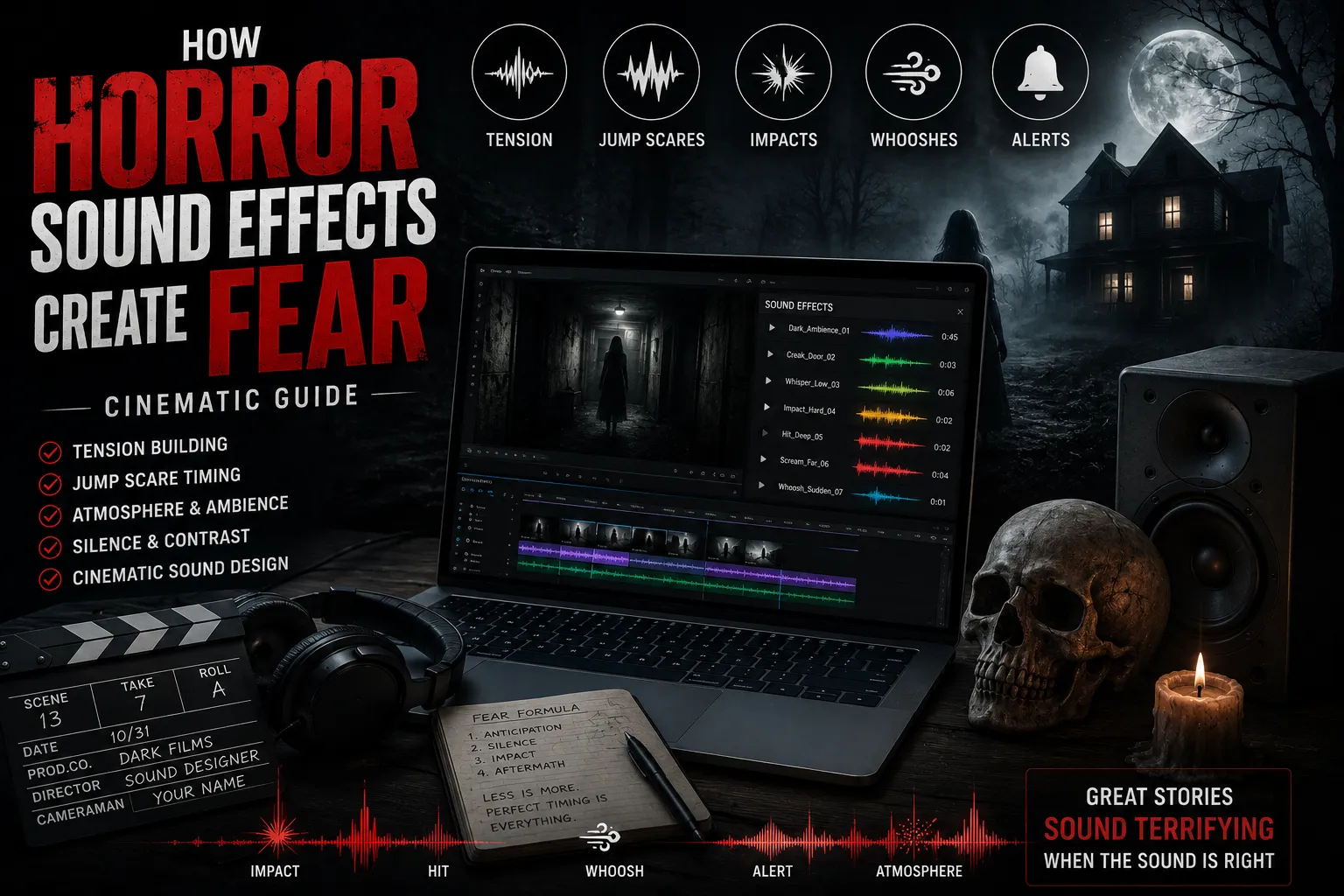
Why Sound Is More Powerful Than Visuals in Horror
In horror content, sound is often more important than visuals. While images show what is happening, audio controls how the audience feels. A simple scene can become terrifying with the right sound design, even if nothing visually dramatic is happening.
Subtle elements like distant alert sounds or quiet movement can create tension long before anything appears on screen. This psychological effect is what makes horror sound design so powerful.
The Psychology Behind Fear and Sound
Human brains are naturally sensitive to unexpected sounds. Sudden changes in volume, tone, or rhythm can trigger instinctive reactions. This is why horror sound effects rely heavily on contrast.
A quiet moment followed by a sharp hit sound or impact effect creates a strong emotional response. This technique is commonly used in jump scares.
Building Tension Before the Scare
Great horror scenes are not about the scare itself — they are about the buildup. Sound designers use gradual changes to create tension and anticipation.
For example, a slow whoosh sound or subtle background noise can make the audience feel that something is coming. This creates unease and keeps viewers on edge.
Jump Scare Timing and Execution
Jump scares are one of the most recognizable elements of horror. However, their effectiveness depends entirely on timing and sound design.
A successful jump scare usually includes a sudden hit or impact sound placed after a moment of silence. Without proper audio, the same visual would feel much less intense.
Using Silence as a Weapon
Silence is one of the most powerful tools in horror. Removing all sound before a key moment increases tension and makes the following sound much more impactful.
This contrast is essential. A sudden impact or hit sound feels much stronger when it breaks silence.
Layering Sounds for a Cinematic Effect
Professional horror sound design often involves layering multiple audio elements. Instead of using a single sound, combining textures creates a richer and more immersive experience.
For example, a scene might include a low-frequency rumble, a subtle whoosh, and a distant alert sound. These layers work together to build atmosphere.
Using Movement Sounds to Create Unease
Movement sounds are often used to create a sense of presence. Even when nothing is visible, subtle audio cues can suggest that something is nearby.
Slow whoosh effects or barely noticeable shifts in sound can make the audience feel uncomfortable without showing anything on screen.
Cinematic Horror Techniques
In cinematic horror, sound is used to guide the audience through emotional highs and lows. Editors carefully control when sound appears and disappears.
If you want to explore more cinematic techniques, check out our Cinematic Sound Effects Guide for deeper insights.
Common Mistakes in Horror Sound Design
One common mistake is overusing loud sounds. If everything is intense, nothing feels intense. Horror relies on contrast, not constant noise.
Another issue is poor timing. Sounds that do not match the visuals can break immersion and reduce the emotional impact.
Creating a Unique Horror Style
Each horror project can have its own sound identity. Some rely on minimal sound, while others use complex layering and effects.
Experimenting with different combinations of impact, hit, and whoosh sounds can help you develop a unique style.
Where to Find Horror Sound Effects
Finding high-quality horror sounds can be challenging. Many libraries lack proper organization or variety.
You can explore a categorized sound library on SoundBankPro, where sounds are organized by tags such as impact, hit, and whoosh.
Final Thoughts
Horror sound effects are essential for creating fear and tension. They shape the emotional experience and keep the audience engaged.
By mastering timing, contrast, and layering, you can create powerful and memorable horror scenes that leave a lasting impression.
“Found this useful? Share it 👇”