Nature Sound Effects Guide
What Are Nature Sound Effects?
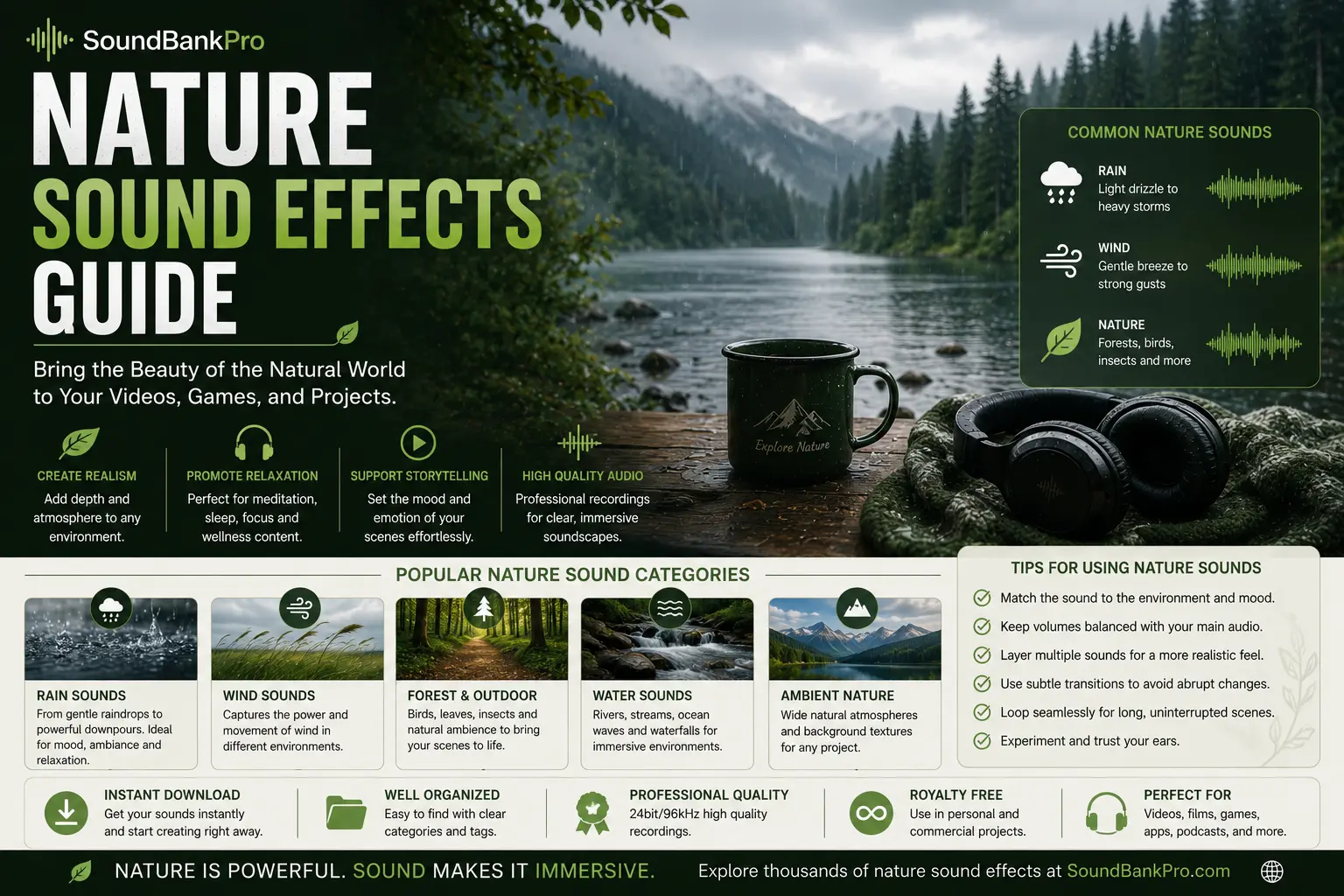
Nature sound effects are audio recordings that capture the sounds of natural environments. These sounds include elements such as rain, wind, and various outdoor textures that help create a sense of realism and atmosphere.
Unlike artificial sound effects, nature sounds are often used to build calm and immersive environments. They are widely used in video production, games, and relaxation content.
Why Nature Sounds Matter
Nature sound effects play an important role in creating realistic and engaging environments. Without background audio, scenes can feel empty and disconnected. Adding natural sound helps bring visuals to life.
For example, subtle wind sounds can add movement to a scene, while steady rain can create a calm and immersive atmosphere.
Common Types of Nature Sounds
Nature sound effects come in many variations depending on the environment they represent. Some of the most common types include:
- Rain sounds: Light rain, heavy storms, and dripping water
- Wind sounds: Gentle breeze and strong gusts
- Forest sounds: Natural outdoor environments
- Water sounds: Rivers, streams, and waves
- Environmental ambience: Background outdoor audio
Each type can be used individually or combined to create a more complex and realistic soundscape.
Where Nature Sounds Are Used
Nature sound effects are used across many industries. In film and video production, they help establish location and mood. In games, they create immersive environments that respond to player movement.
Relaxation and meditation apps rely heavily on sounds like rain and wind to create calming experiences. These sounds are also popular in productivity and focus-based content.
Best Practices for Using Nature Sounds
Using nature sound effects effectively requires subtlety. These sounds should support the experience without becoming distracting. Volume levels should be balanced carefully to ensure a natural feel.
Looping is also important. Nature sounds are often played continuously, so seamless loops are essential. Poor looping can break immersion and reduce quality.
Layering Nature Sound Effects
Layering is a key technique in sound design. Combining multiple elements such as rain, wind, and background textures creates a richer and more immersive environment.
This approach helps simulate real-world environments and adds depth to audio experiences.
Nature Sounds for Relaxation and Focus
Nature sound effects are widely used for relaxation and concentration. Sounds like rain and wind are known to reduce stress and improve focus.
These sounds are often used in meditation apps, study environments, and sleep aids.
Common Mistakes to Avoid
One common mistake is using sounds that are too loud or repetitive. Nature sounds should feel natural and consistent. Another issue is using the wrong type of sound for a scene.
Matching the audio with the environment ensures a more realistic and immersive experience.
Final Thoughts
Nature sound effects are essential for creating immersive and engaging audio experiences. They add depth, realism, and emotional tone to content.
By combining elements such as nature sounds, rain, and wind, you can create rich and believable environments. Explore more sounds on SoundBankPro and enhance your projects with high-quality audio.
Creating Immersive Natural Soundscapes
Creating a realistic natural environment requires more than a single sound. Combining elements such as rain, wind, and subtle nature sounds helps build a complete and immersive soundscape.
For example, a forest scene can include distant wind, light rain, and subtle environmental textures. These layers work together to create a believable and engaging atmosphere that feels natural to the listener.
Using Nature Sounds in Video Production
Nature sound effects are widely used in video production to support storytelling. They help establish location, mood, and atmosphere without requiring additional visual elements.
Adding soft wind sounds or gentle rain can dramatically improve the quality of outdoor scenes. These sounds provide depth and make footage feel more cinematic and polished.
Nature Sounds in Games and Interactive Media
In games, natural audio is essential for building immersive environments. Sounds like wind and environmental ambience help players feel connected to the world around them.
Dynamic sound systems can adjust these elements in real time, creating a more realistic and responsive experience. This is especially important in open-world and exploration-based games.
Improving Relaxation and Well-Being
Nature sound effects are widely used for relaxation and well-being. Sounds like rain and gentle wind are known to reduce stress and improve focus.
These sounds are commonly used in meditation, sleep aids, and productivity tools. Their consistent and natural patterns make them ideal for long listening sessions.
Optimizing Nature Sounds for Long Playback
Nature audio is often used in long-form content, so seamless playback is essential. Loops should be smooth and free from noticeable repetition to maintain immersion.
Careful editing and layering help ensure that sounds such as nature ambience and environmental textures remain consistent over time.
“Found this useful? Share it 👇”